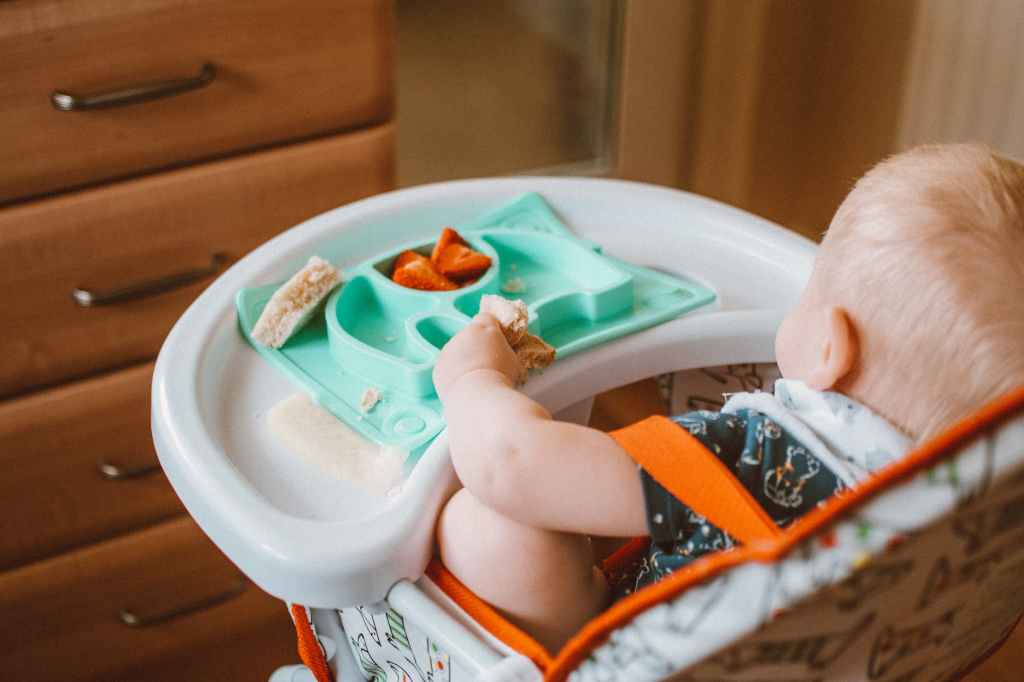
The first introduction of solid foods to your baby is so exciting! I loved seeing the expressions on my twins’ faces when they tasted something new, and watching them learn the skills necessary for eating. It’s a precious time.
One of the first questions I asked our cleft lip and palate clinic when we learned about our son’s cleft, was what to expect when we introduced him to solids. With a complete unilateral cleft palate, there exists a gap along the roof of the mouth that extends all the way to the back of the soft palate.
If you were to run your tongue from the back of your teeth, all along the roof of your mouth, you would feel the hard palate. Eventually if you extended far back enough you would feel it switch to a softer muscle – this is your soft palate.
Now, put your tongue on the roof of your mouth toward one side and imagine that there’s nothing there. You’d probably be able to stick your tongue all the way up into your nose! For someone with a cleft palate, that’s exactly their challenge when eating. They have a little extra to learn when it comes to navigating the food in their mouth. Inevitably, some of it will end up going into the gap. This is why food often comes out of baby’s nose.
The answer that we received when asking about solids for cleft palate was that babies usually did very well and were able to adapt their eating and eat the same things as any other baby. In the season we’re now in with our little guy, I would agree that this is absolutely true. He loves to eat and I give the same foods to him as I do his twin sister.
However, our path to get here was not what I would describe as easy. As in all things food related, we met with quite a bit of resistance before he became the great little eater he is now. Let me give you a bit of a rundown of how we first entered the solid food scene.
My son’s lip repair surgery happened when he was about 5 months old. The guidelines in Canada for introducing solids are to start at 6 months. Many resources give the recommendation of starting between 4-6 months.
We followed the Canadian guidelines when it came to officially starting our twins on solid foods but I felt pretty comfortable giving them small tastes of things like banana and avocado just before they hit that milestone. I distinctly remember about the week before the surgery, putting a little bit of mashed banana on my finger and letting my son taste it. His eyes lit up and he smiled, sticking out his little tongue for more.
Fast forward a month, and we had successfully made it through the lip repair. If you’re interested in knowing more about that experience, I have an article outlining our expectations vs what actually happened.
Baby boy had healed well from the surgery and we were on track to start him and his sister on solids. Thinking back to how well that little taste of food had gone, and knowing how dearly he loved his bottle, I had every expectation that he would take to food immediately. He had been showing all the signs of being ready – sitting up, grasping his toys and bringing them to his mouth, ogling my food and watching me eat.
We started off simple: cereals and purees (baby-lead weaning scares me, but we’ll get there). Baby girl took to it immediately. One of my favourite videos of her is from when she first started eating. We’d put the spoon to her mouth and she would stick her little chin out and work at sucking the food off the spoon. It was a little like that scene in Beauty and the Beast, where the Beast learns to politely eat porridge. But, of course, she did it in the cutest way possible, as only a baby can.
Next up was baby boy – he … well, he didn’t want anything to do with it. We would bring the spoon to his mouth and he would tighten his little lips and turn his head away. He’d look warily up at us with his big blue eyes.
It didn’t seem to matter what we offered – rice cereal, oatmeal, barley cereal, apple puree, mashed banana, mashed avocado, pear puree, mango puree, sweet potato – it was all met with the same reaction.
Somewhat dismayed, we kept at it. Every day, baby girl would scarf down her meal with gusto and baby boy would turn his little face away. So how did we finally get baby boy on board with solids? These are my top tips.
1. Find what utensils work for you
When we first started solids, we had a bright orange spoon that we were using – it worked great for our little girl. It had a nice small bowl that was designed for little mouths and made it easy for her to take a bite.
For our little guy, it was a no-go. Given his history with doctors and dentists sticking tongue depressors and mirrors in his mouth, I think the bright colour and slim shape conjured up too many bad memories for him to be able to eat comfortably.
We purchased a set of silicone spoons that ended up working a lot better for us. They were a nondescript grey, so no loud colour to draw his attention. It had a short handle that he could grab easily and the bowl was shaped a bit differently, so it didn’t read like a classic spoon. We found he had a lot of success eating with these. He could take a bite, chew on the spoon a little and then in his own time be ready for another bite.
2. Keep it positive
This was advice we received from our feeding team and we really took it to heart. They encouraged us to set baby up for success by having him sit in his high chair for meal times, and follow his cues for eating. That meant that if he closed his mouth and didn’t want to eat, we didn’t push it. We didn’t want to force-feed him and create a negative association with meal times – we wanted it to be a fun and happy time to make him want to eat.
This wasn’t always easy. I had many days where I was very discouraged with the progress we were making and it was hard to stay upbeat. I will admit that a time or two, I took advantage of a big smile and put a little bit of cereal between his bottom lip and gum in hopes that if he just tasted it, he would realize it was good and want more. Sometimes that worked and other times it didn’t. I didn’t push the issue. If he started crying in his chair, we considered mealtime over and moved on.
3. Try letting baby feed themselves
This was a recommendation from our speech pathologist and it was a game changer for us. While our little guy hated when we put a spoon to his mouth, he was more likely to eat if he could do it himself.
He didn’t quite have the dexterity to reliably pick up the food with a spoon on his own, so I would scoop a little up and hand it to him. He would then put it in his mouth and eat. I would have a second spoon handy to quickly swap out an empty one with a full one. In this way, we created a little game that made eating fun. Most importantly – he was eating!
4. Try thicker consistencies
There seems to be some debate on whether to go thicker or runnier in food consistency with cleft babies. Some resources say runnier is better, because of the tendency for food to go up baby’s nose; for some babies, maybe that’s true. In our case, after a lot of trial-and-error, we actually found that we had better luck with thicker consistencies.
Baby boy really didn’t like the sensation of food going up his nose – who would? He wasn’t a baby that spit up overly often, which meant it was quite foreign to him when we started solids. We found he preferred a thicker consistency, because it gave him more control over the food in his mouth. We think this was why he never really took to purees, but was all over finger foods once we could give them to him.
5. Let baby develop his eating strategy
As we watched baby develop in his eating habits, we noticed that there were little things he would do to work around the cleft palate and create his own strategy for eating. It looked different from his twin sister but it worked for him.
I mentioned putting a little bit of cereal between his gum and lower lip on the rare occasions he would let us spoon-feed him – once he started manning the spoon on his own, this was how he preferred to put food in his mouth. Then, he progressed to putting the spoon further in. He would hold it upside down (another reason thicker was better), so that once it was in his mouth, the food was directly on his tongue where he could control it, rather than being pushed straight up into his nose.
When we started finger foods, we noticed another way he was adapting. He would carefully place a piece of food along the gumline of his “good side”. From there, he’d be able to chew or maneuver it however he needed.
I was amazed at his resilience and how he came up with solutions to his challenges.
6. Be patient
This is probably the hardest part – it certainly was for me. There were many days when I would be lucky to get baby to take a single bite. In those moments, I would wonder if he would ever get to the point of eating on his own.
I felt like I had tried everything. We were making progress but it was painstakingly slow. We even did a brief stint with baby-lead weaning to see if he had more of an interest in whole foods. He was interested but we found he just wasn’t ready with the skills for how to control the food in his mouth.
Our real breakthrough came when he was around nine months old. I had tried baby-lead weaning at seven months and had stopped because I was really uncomfortable with it and it wasn’t giving us any better results than the purees.
But at nine months, I started to notice that he was crawling around and using his little pincer grasp to put just about anything he could find on the floor into his mouth. One day in particular, I had forgotten to put my broom back in its rightful place and found him slowly picking off and eating dust particles.
If he can figure out how to eat that, surely he’d be able to handle small pieces of actual food, I thought.
After a quick scan online, I found that the pincer grasp was a good indicator for babies being ready to start finger foods and nine months was generally when this developed. I had started giving him little grain puffs and he was a huge fan of those.
I started with some little pieces of avocado and scrambled egg. It was like we had found a hidden key. He loved being able to pick up the little pieces and put them in his mouth. He was old enough that I could really see the difference between how he handled the food in his mouth now versus when I had tried a few months earlier. Once we started on finger foods, we never looked back.
It was difficult to be patient, but by persevering through, we finally got to the point where meal times were no longer painful. Now, I can barely get his food to him fast enough. He looks at the plate coming with eager anticipation, swinging his little feet and licking his little lips.
Conclusion
I truly hope that if you are starting to introduce solids to your baby with a cleft palate, you never need these suggestions. I hope it’s hugely successful and your baby takes right to their food.
But, if like us, you’re finding yourself struggling with this transition, I hope some of these suggestions might be helpful. You’ve got this, mama, and you’re doing a great job!

 Love the Unexpected
Leave a reply to A lesson in perseverance – Love the Unexpected Cancel reply