With any new experience, you can only be so prepared for what will happen. Even in well-laid plans, lead by experts, there will always be things that happen differently from what you imagined.
We had a good experience with our son’s cleft lip repair surgery. The cleft lip and palate clinic did a good job of setting our expectations and walking us through each step. Many things happened just like they said they would – and yet, it was still a brand new experience for us. Here are a few things we were primed for and how they played out in reality.
1. An overnight stay at the hospital post-op
Expectation:
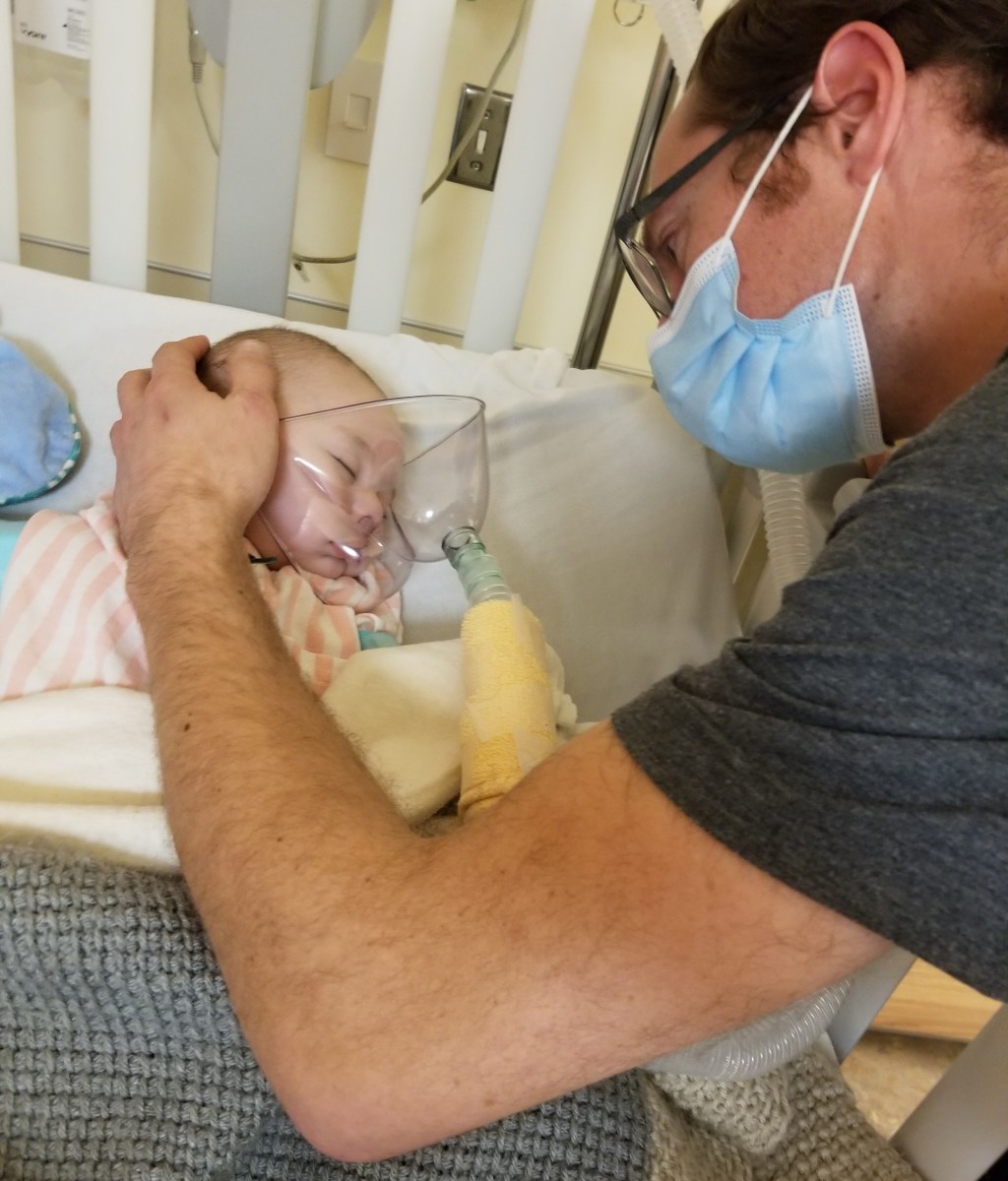
The cleft lip and palate clinic had given us a timeline for how long we’d likely be in the hospital, assuming everything went well and we didn’t run into complications. The surgery would be done first thing in the morning and would take about three hours. We knew that they would want to keep him overnight for monitoring – this was to ensure that he was eating and breathing okay. So long as we didn’t run into any issues, we could expect to be discharged the following morning
With this in mind, we made a plan for my husband and I to be at the hospital while the surgery was in progress and when baby woke up. My husband would then go home to be with our daughter, while I stayed the night
Reality:
It was a pretty stressful stay, through no fault of any of the doctors or nurses. The care that we received was excellent and our night nurse was particularly helpful.
The challenge was that I found myself feeling like a fish out of water with regard to how to care for my son. In the previous months, we had developed a great routine for feeding and napping. That all went out the window post-op.
My first area of uncertainty was how to get him back on track with his eating. He was behind a few feeds, since he had been fasted going into the surgery and wasn’t awake enough to try eating until about three hours after. We started him with a little Enfalyte to make sure he could keep it down.
That first taste of food seemed to wake him up and he showed signs of being really hungry, but only ate in 60 ml increments. I found myself feeding him a little bit every hour, until around 7 pm when he started to take more food. After those first few hours, his eating started to look familiar again.
The second piece that I had to figure out was sleep. Sleep would turn out to be a challenge that would take about a month to fully get back to normal.
In the hospital, I noticed that his sleep was very restless. He would seem to finally find a comfortable spot in the bed and doze off, only to wake a few minutes later. If he couldn’t see me, he would cry. I also noticed that though he was wearing arm restraints to prevent him from touching his face, they were not foolproof and he was still able to rub his face against the bed or his hospital gown. These two dilemmas made me very anxious about leaving his side for any period of time.
After trying a few times to let him sleep on his own, I found that he just couldn’t get comfortable and opted to hold him instead. This seemed to be how he slept best, though I had to be careful of the monitors and IV that he was attached to and make sure he wasn’t positioned in such a way that his face would rub against my shirt. So, there we sat until around 10 pm.
The night nurse came in and helped me convert my chair into a bed (I’m embarrassed to say that I couldn’t figure it out myself and didn’t have the hands to anyway), and we snuggled in for the night. He woke up every three hours on the dot for a feed, but we had been used to this schedule from his newborn days. At 4 am, he woke up happy and WIDE awake. Mom was not quite so alert, so I did let a couple of the night nurses occupy him while I got an hour of sleep. That was a huge blessing, so thank you to those nurses.
There was one other stressor that wasn’t a big deal or anything that we could change but acted as an undertone to enhance my anxiety. All this was taking place a) somewhere unfamiliar that was not my well-equipped home and b) in a room that wasn’t really setup with baby care in mind.
We were in a shared room with two other beds and over the course of the day, we watched three other patients enter and leave. I was thankful to have the room to ourselves overnight; it would not have been an environment conducive to a good night’s rest for another recovering child.
We occupied the bed on the far left of the room, which meant we had a wall on one side and access to a counter that the nurses used. This provided necessary space for me to mix bottles; however, the sink was located on the other side of the room, stationed in view of the patient in the third bed.
Unfortunately, I only had two bottles with me, which meant I needed access to the sink to wash them and because of baby’s more-frequent-than-usual feeds, I needed to wash them quite often. Thankfully, by the time this happened, the other patients had been discharged but I did have to leave baby for a few minutes each time, which resulted in more than a few tears.
As an aside, if this post reaches anyone in the business of designing hospitals, I might suggest reconsidering the choice of automatic taps. If you’ve never had the pleasure of trying to wash the components of a baby bottle in a sensor-activated sink, count yourself blessed.
These were very minor inconveniences and they were certainly things I could and did workaround. But, in the midst of a stressful situation, it’s those little things that chip away at you and add to any pre-existing aggravations.
We made it to morning, however, and baby was doing great which was the most important thing. His eating volume was a little lower than usual but I knew from experience that he ate best at home, so I wasn’t concerned. The surgeon came in to take a look at the stitches and gave us the all clear to head home. My husband arrived shortly after to drive us, and I don’t think I ever saw a cup of coffee look as good as the one he walked in with.
I was thrilled to go home and snuggle my daughter, whom I’d been missing.
2. Keep baby from rubbing or touching his face
Expectation:
With a lip repair, there are a lot of stitches that are exposed, which makes sense since the purpose of the surgery is to connect the lip together. It’s very important then, that baby doesn’t touch his face or come into contact with rough fabrics or hard toys.
The primary way that he was prevented from touching his face was by applying arm restraints that kept him from bending his elbows. These were little fabric restraints that contained pieces of wood and were velcroed on near the shoulder and wrist of each arm. We would need to keep the arm restraints on for one week and keep a close eye on baby to make sure he wasn’t rubbing his face. How hard could that be?
Reality:
This was a lot easier said than done. In the hospital, I noticed that although the arm restraints did keep him from bending his arms, there was almost no way to keep him from rubbing his face against other surfaces like the bed, his pillow, his hospital gown, etc.
Once we got home, this got harder. Baby had just learned to roll the previous week and while he was pretty low energy in the first few days after we were discharged, at about day three he was ready to move. If there’s one thing I will note about my son’s personality, it’s that he’s highly motivated. By the end of the week, he’d figured out how to roll with the arm restraints. He’d also figured out how to get them off.
The good news is that he seemed to be aware of the sensitivity to his face and was very careful in everything he did to protect it. We didn’t witness any devastating face plants, and even when he did manage to get an arm restraint off, his first reaction wasn’t immediately to touch his face. It usually happened in the night and seemed to help him sleep more comfortably.
3. Extra snuggles and attention for baby
Expectation:
Any time our child is sick, we know that they seem to need a little more cuddling and tend to be a bit fussier than usual. So, naturally, we expected that baby would need a bit more attention than usual. In preparation, my husband took the week off to be available and help keep the house running.
Reality:
As expected, baby did need extra attention. What took us most by surprise was the disruption to sleep that ensued. It was something we hadn’t been warned to watch for, so we weren’t entirely prepared.
First, let me explain the context of what sleep for baby boy had looked like pre-op. He was a great sleeper – for naptime, we would put him down and he would go to sleep. By four months, he was sleeping through the night, with an early feed first thing in the morning.
This made for a bit of a shock after surgery, when we found that he needed a lot of support for sleeping. He seemed to have some anxiety around being left in his crib, so all of his naps for that first week were contact naps. He would let us put him down at bedtime, but he continued to revert to the three-hour feeding schedule from his newborn days. Once he woke up from a feed, we couldn’t put him back down, so we would bring him into bed with us for the rest of the night.
After the first week, we found that we were able to gradually ease him back into better sleeping habits. For example, we were able to put him down in his crib for naps again. Then, we’d be able to return him to his crib after nighttime feeds. Over time, things got back to normal but it was probably at least a month to a month-and-a-half before it seemed like we were fully returned to our pre-op days
Would I do anything differently?
Very likely, the realities outlined here make it seem like this was a very negative experience. Really, it wasn’t. There were many, many things that went right and on track.
Baby didn’t have any negative reactions to the anesthetic. He was able to go home on schedule without any complications. The regimen for keeping the surgical site clean was easy to follow and worked – we didn’t have any infections to content with. Baby was kept on a rotation of Advil and Tylenol which seemed to work to keep the pain at bay – if anything administering it seemed to be the hardest on him. After a week, he was comfortable coming off the painkillers.
Each and every one of these things was a huge answer to prayer. I’m thankful for the positive experience we had. But, if you’re facing a journey with cleft lip and palate, sometimes it’s helpful to hear both what went well and what was unexpected to help mentally prepare. My hope is that if you’re finding yourself in this situation, these expectations vs realities will be helpful.
Having now been through it, would I do anything differently? Honestly, not really. I might have packed a bit more food for myself, knowing now that I couldn’t really leave the room and the cafeteria closed at 5 pm anyway (again, anyone designing hospitals, take note).
But seriously, we were as prepared as we could be and there are some thing that you just have to learn and cope with as they come. Is that fun? No. But ultimately, this was as good an experience as something like this could be and we learned a lot that will go a long way toward preparing us for the next surgery.

 Love the Unexpected
Leave a reply to Top tips for introducing solids with cleft palate – Love the Unexpected Cancel reply