During our 20 week anatomy scan, my husband and I learned that our son would likely be born with a cleft lip and potentially a cleft palate. We didn’t know a lot about clefts at the time, but we knew it was something that could be corrected and were hopeful that it wouldn’t be too severe.
If you haven’t had a chance to read the story of how we first found out the news about our son’s cleft lip and palate, check out my post 5 reminders that brought me peace during unexpected pregnancy news.
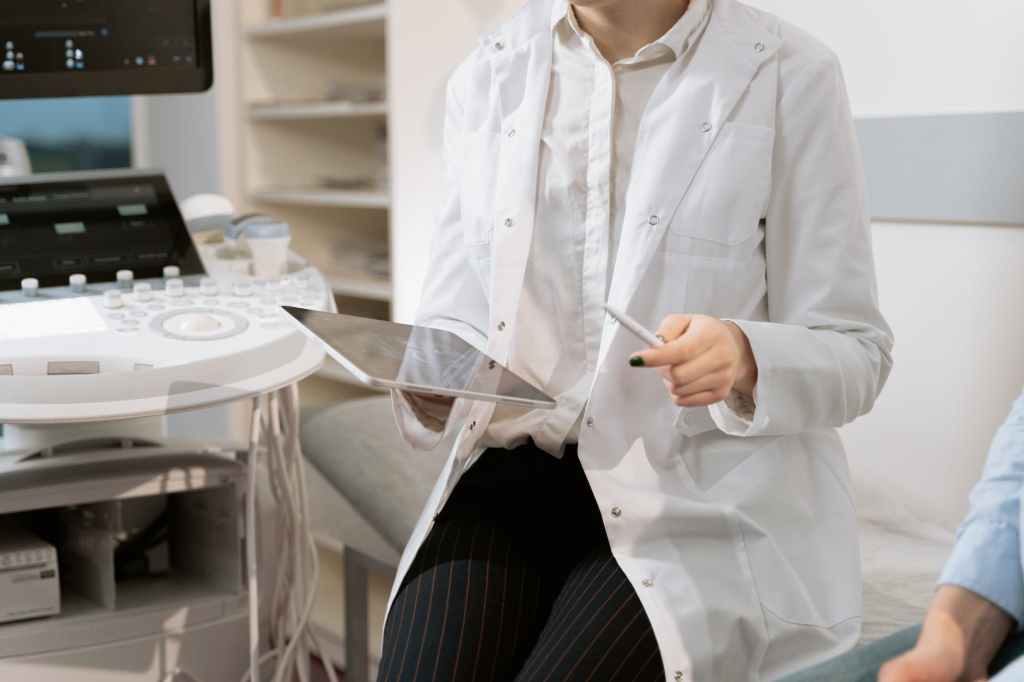
After the anatomy scan, we were referred to another ultrasound clinic that specialized in maternal fetal medicine. About a week later we were booked in for a second ultrasound to take more detailed pictures of Baby A’s face.
We walked into the scan extremely nervous. In my heart, I was harboring hope that the initial technician had gotten it wrong and there was no cleft at all. If not that, maybe it was only the lip that would be affected.
My husband and I were called in and the technician started taking pictures and measurements. As we watched, I remember one picture in particular that they captured in the 3D ultrasound. It was a beautiful and clear shot of my baby boy’s face, the cleft lip clearly displayed. I knew then that I would have to let go of the hope that there was no cleft at all.
The ultrasound took forever – although, it was largely because they hadn’t been able to get a good shot of my baby girl’s left hand in the first scan and it took the better part of an hour to finally get her to stop making a fist and show all five fingers.
We eventually were taken back to an office, for the doctor to review the results. He came in and took a deep breath – my first sign it wasn’t going to be good news. He proceeded to explain the variation in clefts that can occur.
The Cleveland Clinic gives a good breakdown of the types of clefts in their Cleft Lip & Cleft Palate article, but generally we learned that when it comes to clefts, there is a difference between cleft lips and cleft palates. A baby can have just a cleft lip, just a cleft palate, or both.
In a cleft lip, the lip doesn’t fuse together properly, creating a visible gap on one or both sides of the lip (i.e., unilateral or bilateral). In a cleft palate, a gap can exist in just the soft palate, at the back of your throat, or it can include the hard palate that spans the top of your mouth. This can also be unilateral or bilateral.
In all clefts, there is variation in the size, or the width of the gap(s) that occurs. Some babies have clefts as small as one millimeter, or as large as almost a centimeter.
He then proceeded to tell us about our baby.
“From what we can tell on the scan, it looks like your son has what is called a complete unilateral cleft on the left side. This means that all three parts of the mouth will likely be affected – he certainly has a gap in his lip and hard palate; while it’s harder for us to really see the soft palate, I suspect that it will also be affected. In terms of the size of the gap, it is quite large.” He was matter-of-fact in the delivery of the news.
“So it’s pretty bad.” I translated his words.
“Well, I wouldn’t say good or bad, but I would say that it is certainly pronounced.” He dodged.
For the record, it was in fact pretty bad. Baby A’s gap measured at 10mm at his first dentist appointment.
It wasn’t the news that my husband and I were hoping and praying for. After that appointment, the reality settled in. We cried together in our car, sad to think about what our son would have to go through.
The next appointment was with the geneticist. I liked him immediately – after the somewhat cold experience at the ultrasound clinic, this man was warm and sensitive to the fact that we weren’t meeting under optimal circumstances.
He started with a few preliminary questions about my husband and myself, our medical history, whether there were any clefts in the family, etc. Then he asked me whether there was anything he could think of that I thought might have caused the cleft.
“Well,” I said, “I wasn’t taking folic acid when they were conceived. I know one doctor mentioned that. Otherwise, I had a cold and fever at about ten weeks. It might have been COVID, but I’m not sure.” Those were the things that I’d been thinking about, wondering if maybe this could have been avoided if I’d done something different.
“Okay, well, a baby’s lip and palate are developing between five and nine weeks. Essentially, the different parts of the mouth develop and then fuse together. For whatever reason, with a cleft, this fusion doesn’t happen properly. There seems to be a bit of a weakness in this development process for humans, which is why we see clefts so commonly. But, I want to assure you that it is very unlikely that anything that you did would have caused the cleft.” He replied.
His words brought me a lot of comfort. He proceeded to explain to me the different types of clefts, similar to the information I’d received from the ultrasound doctor. He also went over the fact that there were two main categories of clefts: syndromic and non-syndromic. In a syndromic cleft, there are other genetic disorders present along with the cleft. This can include chromosomal syndromes, duplication/deletion syndromes, etc.
I had read about the possibility of syndromes associated with clefts in the documentation that had been provided to me by the cleft lip and palate clinic and I’ll admit that it had made me anxious. When learning of the cleft, I had assumed everything else would be fine. I had no idea there were other medical issues we might be facing.
The geneticist proceeded to go over our ultrasound results and gave us several positives. He explained our options for testing, if we wished to identify any syndromes before the babies were born but assured us that these were also tests that could be done after delivery. Ultimately, we knew any information we got from those tests wouldn’t really change anything for us, and while it’s always great to be prepared, there were risks to conducting them that we didn’t feel would be justified in our case.
I walked out of that appointment feeling a lot more at ease with the diagnosis; however, it was still a lot to take in.
My husband and I spent the next month or so processing the news we’d been given. I remember some of the most common emotions that came up during that time.
The most prevalent was certainly fear, a large part of which came from having very little knowledge around what our next steps were. I had a bit of information to work from based on the resources I’d been given by the clinic, but I didn’t know when surgeries would happen, how much support I’d have from the medical system in terms of coordinating everything and connecting with surgeons. I didn’t know what I didn’t know and that was a scary place to be.
There was also some mourning that I had to work through. I wouldn’t be able to breastfeed, which was something that I had looked forward to. Even if I could pump, Baby A would need to be bottle-fed, since babies with a cleft can’t create the suction necessary to breastfeed. I remember feeling a sense of grief that my baby wouldn’t be able to experience a totally normal childhood, that he would have to go in for corrective surgeries and navigate life with a facial difference.
Eventually, the initial shock wore off and those first reactions gave way to a sense of determination. We loved our baby so much, and all we wanted to do was make sure we were prepared to give him the care he needed. The Bible tells us:
Consider it pure joy, my brothers and sisters, whenever you face trials of many kinds, because you know that the testing of your faith produces perseverance.
James 1:2-3
When God created our baby boy, he created him with a purpose and a plan and while that plan was starting out with some hills that we’d need to climb, there was a piece of me that felt honoured. God was entrusting this little person to us. I got to be his mom, to carry him and walk through every battle with him. I got to be the one to comfort him and advocate for his care. What a great responsibility and yet what an incredible gift.
Our next appointment was when I was about 24 weeks, when we talked with the coordinator of the cleft lip and palate clinic that we’d been referred to. I’d opted to hold off on the meeting a bit, preferring to get the information a little closer to delivery so that it would be fresh in my mind and also to give me some time to think about what questions I had. When we finally met with them, I had tons of questions but thankfully this was one of the most helpful meetings yet.
These people know cleft lip and palate. They were able to help me plan for which bottles he would need, what to expect after delivery and getting home, which surgeries he would need and when they usually scheduled them. We could tell this was a well oiled machine and the clinic would be walking us through every step. After that appointment, my husband and I felt much better prepared and confident about our next steps.
After that appointment, there wasn’t much related to the cleft for us to do but to continue waiting in anticipation of meeting our two beautiful babies. Of course, it wouldn’t be a twin pregnancy if we didn’t face a few more hurdles…

 Love the Unexpected
Leave a comment